Deprecated: strpos(): Passing null to parameter #1 ($haystack) of type string is deprecated in /var/www/vectronic-aerospace.com/wp-content/themes/Divi/includes/builder/functions.php on line 4036
Deprecated: strpos(): Passing null to parameter #1 ($haystack) of type string is deprecated in /var/www/vectronic-aerospace.com/wp-content/themes/Divi/includes/builder/functions.php on line 4036
© Charl Senekal
Projects
An excerpt of some of our partnered projects
USGS- Polar Bear Research
© Anthony Pagano, U.S. Geological Survey
USGS- Polar Bear Research
Polar bears (Ursus maritimus) are one of 4 marine mammal species managed by the U.S. Department of Interior. The USGS Alaska Science Center leads long–term research on polar bears to inform local, state, national and international policy makers regarding conservation of the species and its habitat. Our studies, ongoing since 1985, are focused on population dynamics, health and energetics, distribution and movements, maternal denning, and methods development. The majority of our research focuses on the two polar bear subpopulation’s whose range includes Alaska: the Southern Beaufort Sea subpopulation that ranges between the North Slope of Alaska and western Canada and the Chukchi Sea or Alaska-Chukotka subpopulation that ranges between the northwest coast of Alaska and eastern Russia. The overarching goal of our research is to assess current and projected future responses of polar bears to a rapidly changing Arctic environment.


KopeLion- Lions in Tanzania
© Ingela Jansson – KopeLion, Tanzania

KopeLion
Lion-Maasai Coexistence in Ngorongoro, Tanzania
KopeLion strives to enable lasting coexistence between people and lions in northern Tanzania. Tanzania’s Ngorongoro Conservation Area (NCA) together with Serengeti National Park and surrounding areas, forms one of the largest savanna ecosystems in the world. Its Ngorongoro Crater contains one of the densest, most studied and valuable lion populations in Africa. As a multi-use protected area, the NCA is also home to almost 100,000 traditional pastoralists who rely almost exclusively on livestock for their livelihood. Lion attacks on livestock pose a significant financial burden on the NCA’s residents, often prompting retaliatory lion killings. As a result lions have disappeared from much of their historical range within the NCA, largely isolating the Crater population from the rest of the Serengeti ecosystem. KopeLion, founded in 2011, aims to ensure that lions survive and thrive alongside human communities in Ngorongoro.


African wild dog dispersal and demography
© Gabriele Cozzi – Population Ecology Research Group, University Zurich


African wild dog dispersal and demography
The African wild dog (Lycaon pictus) is Africa’s most endangered large carnivore and is listed as endangered in the IUCN Red List. The species was formerly distributed throughout sub-Sahara Africa but today it has disappeared from most of its former range. Less than 6’000 free-ranging individuals survive in the wild, and the species has been given very high conservation priority. One major threat to the survival of the species is the loss and fragmentation of suitable habitats due to expanding human population. As a result, wild dogs are forced to live in isolated small subpopulations, which are particularly vulnerable to extinction.
Click on the logos to learn more about the project and its partners.


Living with Lions: Learning to coexist
with California’s mountain lions
© Quinton Martins – All Hands Ecology, Living with Lions

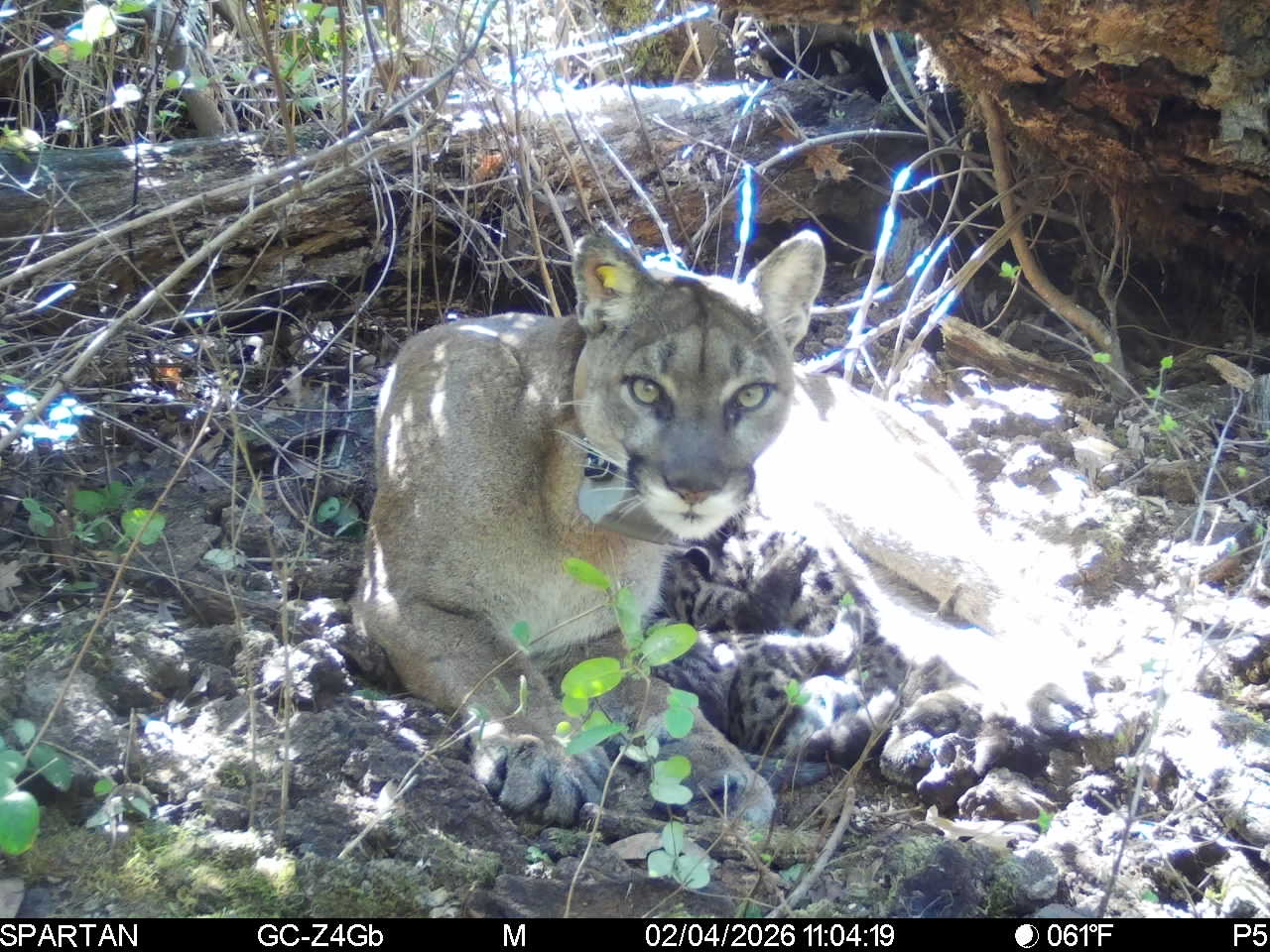
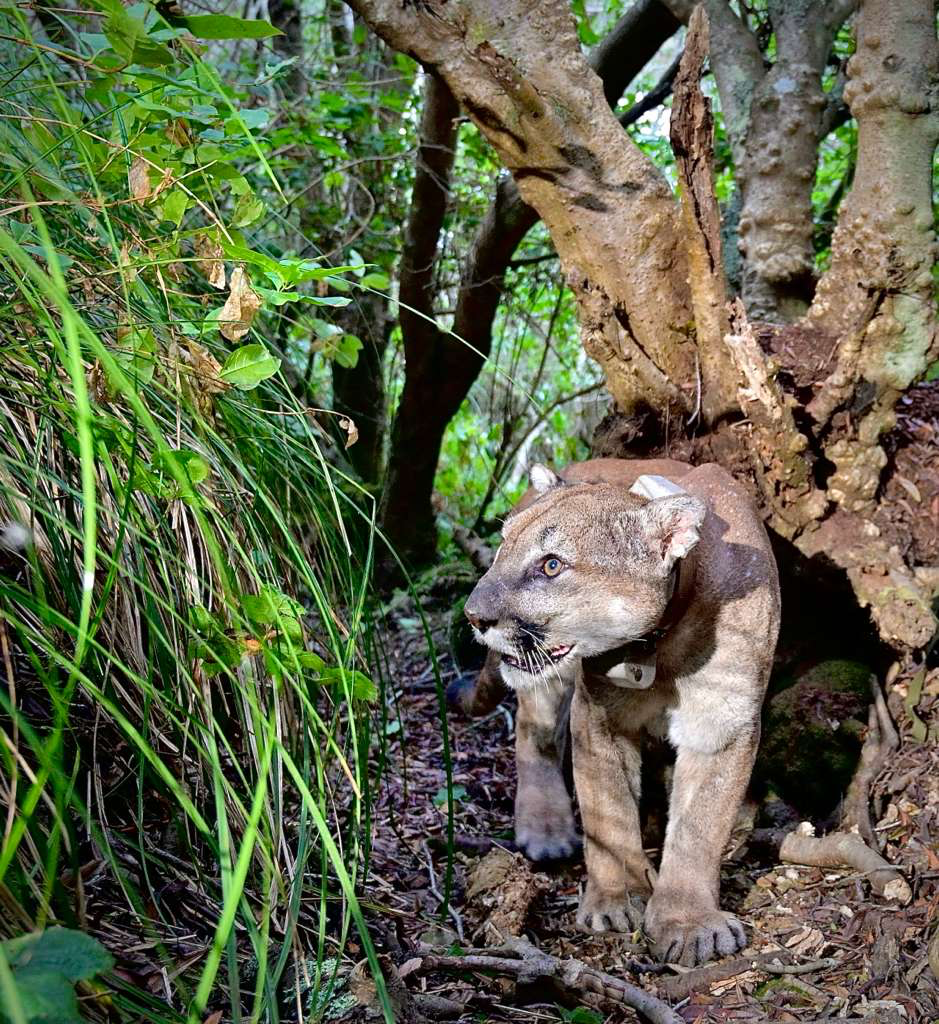
Mountain lions in the San Francisco North Bay live a fragile existence
In California, mountain lions are at the top of the food chain and play critical roles in the maintenance and functioning of our natural ecosystems. Yet mountain lions themselves live a fragile existence as more of us choose to live and play in wild places.
A collaboration between True Wild Conservation and All Hands Ecology, Living with Lions is one of only five programs in the state permitted to trap and collar lions. Since 2016, the study has collected more than 238,000 GPS locations for 40 mountain lions, contributing to the understanding of home ranges, habitat use, and wildlife movement, and supporting identification of critical wildlife corridor values and habitats in most need of protection.
Research is paired with community engagement and education, including a cohort of volunteer Lion Ambassadors who bring mountain lion science, conservation, and coexistence strategies into schools and communities throughout the North Bay, helping to translate science into conservation action.
Living with Lions’ network of partners include the California Department of Fish and Wildlife, California State Parks, UC Berkeley, UC Davis, Sonoma County Regional Parks, Sonoma County Ag + Open Space, Sonoma Land Trust, Sonoma Ecology Center, the Natural Resources Conservation Service, and the Marin, Sonoma, and Gold Ridge Resource Conservation Districts.


Return of the Bison to the South Caucasus
© WWF – A. Heidelberg
- Brief discription
The WWF Azerbaijan office together with its partners – the Ministry of Ecology and Natural Resources of the Azerbaijan Republic and the IDEA (International Dialogue for Environmental Action) Public Union – are cooperating to reintroduce European bison (Bison bonasus; LC-line) to Azerbaijan’s Shahdag National Park in the Greater Caucasus.
- Goal
The goal of the project is to build a viable population of free-ranging European bison on the southern slopes of the eastern Greater Caucasus zone in Azerbaijan.
- Partners & Supporters
In Azerbaijan: Ministry of Ecology and Natural Resources and IDEA Public Union
In Europe: Ex-situ Program for European bison of the European Association of Zoos and Aquariums (EAZA/EEP) and WWF-Germany.
All the animals were donated by zoos (e.g. Tierpark Berlin, Pescheray, Sainte Croix, Thoiry, Bellewaerde and others). The zoos also provide logistical and technical services and advice.
- Funding
The project has been funded through the Transboundary Joint Secretariat for the Southern Caucasus and is implemented by the WWF Caucasus Programme Office (financed by the German Ministry of Economic Cooperation and Development through KfW Development Bank) and WWF-Germany.


LIFE Lynx

Preventing the Extinction of the Dinaric-SE Alpine Lynx Population Through Reinforcement and Long-term Conservation
LIFE Lynx project’s primary objective is rescuing the Dinaric-SE Alpine lynx population from extinction and to preserve it in the long term. Currently, the population is small, isolated, and extremely inbred. It urgently needs reinforcement by introducing additional, healthy animals from another population. They will reinforce the Dinaric-SE Alpine population with lynx from the viable source population in the Carpathians, while maintaining high public support. They collaborate across all EU countries sharing this population to develop and implement a systematic approach to ensure long-term viability of the reinforced population.


